
Article: How to Clean Gold Jewelry at Home Without Damage?

How to Clean Gold Jewelry at Home Without Damage?
Last Updated: October 27, 2026
Quick Summary
To clean gold jewelry at home, use warm water and mild dish soap, which lifts oils and loose grime without damaging softer finishes. Skip ammonia-based cleaners and chlorine bleach entirely, and place a fine-mesh strainer or rubber stopper over the drain before rinsing.
- Cleaning gold at home takes about ten minutes with warm water and mild dish soap.
- Dish soap is the safest everyday cleaner for solid gold because it has no abrasives or solvents.
- Skip ammonia-based cleaners and chlorine bleach entirely when cleaning gold.
- Gold is soft, so delicate gems or vintage pieces need extra caution.
- Cover the drain with a fine-mesh strainer or rubber stopper to prevent losing loose stones and small earrings.
Table of Contents
- How to Clean Gold Jewelry at Home: The Safe Step-by-Step Method
- How to Clean Gold Jewelry With Dish Soap
- How to Clean Gold-Plated Jewelry at Home Without Ruining the Finish
- How to Clean Gold Jewelry With Toothpaste (and When to Skip It)
- Frequently Asked Questions
How to Clean Gold Jewelry at Home: The Safe Step-by-Step Method
Learning how to clean gold jewelry at home takes about ten minutes and two things you already own: warm water and mild dish soap.
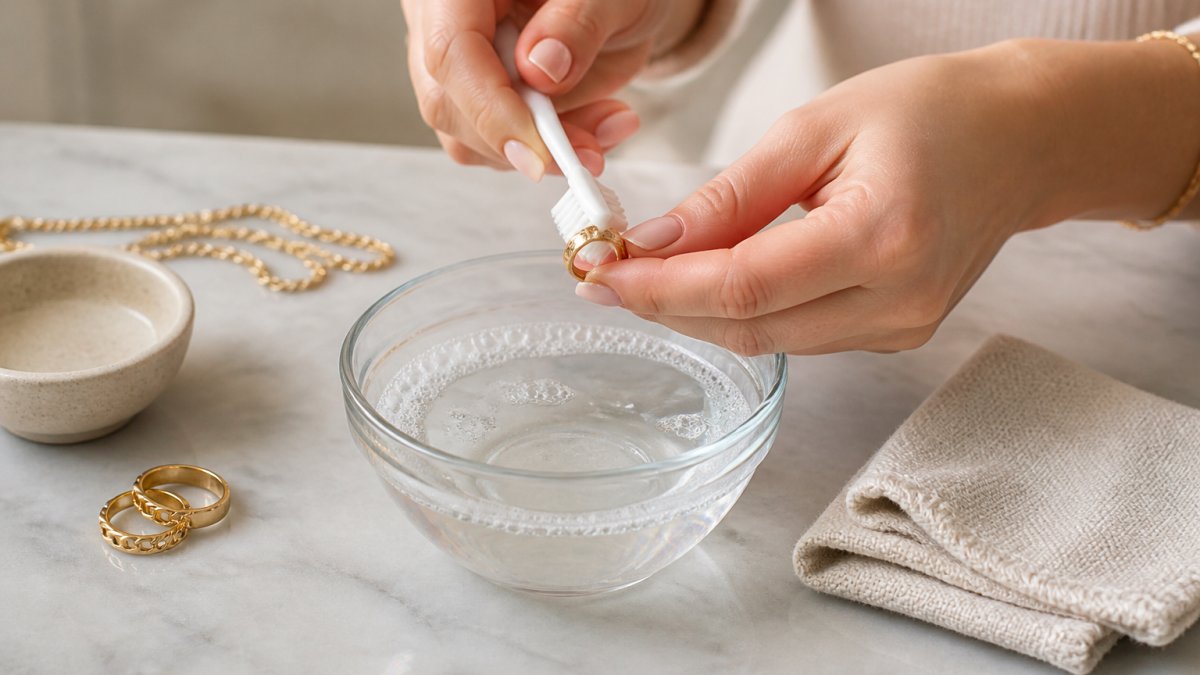
The Gemological Institute of America's jewelry care guidance makes one point most guides skip: the right method depends on the materials. Gold is soft, and delicate gems or vintage pieces need extra caution. Skip ammonia-based cleaners and chlorine bleach entirely.
If you want a piece worth caring for, browse our gold teardrop studs.
Here are the key facts to keep in mind before you start cleaning gold at home.
| Item | Value | Note |
|---|---|---|
| Time needed | About ten minutes | Uses warm water and mild dish soap |
| What to avoid | Ammonia-based cleaners and chlorine bleach | Skip entirely |
| Gold property | Soft | Delicate gems or vintage pieces need extra caution |
| Drain protection | Fine-mesh strainer or rubber stopper | Prevents losing loose stones and small earrings |
How to Clean Gold Jewelry With Dish Soap
Dish soap is the safest everyday cleaner for solid gold because it lifts oils and loose grime without the abrasives or solvents that damage softer finishes. Elizabeth Doyle of Doyle & Doyle told Vogue's jewelry cleaning guide that warm water with a mild dish soap is the safest at-home option, and most jewelers agree.
For a piece that holds up to daily wear, see our gold charm bracelet.
How to Clean Gold-Plated Jewelry at Home Without Ruining the Finish
Our gold-plated halo ring is made for exactly this kind of gentle care.
How to Clean Gold Jewelry With Toothpaste (and When to Skip It)
Our twist ring is simple to maintain with the soap method.
Frequently Asked Questions
Can you clean gold jewelry with toothpaste?
Toothpaste can work on solid gold in a pinch, but it is abrasive and can scratch polished surfaces or wear down plating over time. Use a tiny amount of non-gel, non-whitening toothpaste on a soft brush, rub gently, and rinse thoroughly with warm water. Skip it entirely for gold-plated pieces, gemstones, or vintage jewelry. For everyday cleaning, warm water and mild dish soap are safer and just as effective at removing oils and grime.
How often should you clean gold jewelry?
Clean solid gold pieces every two to four weeks if you wear them daily, since skin oils, lotions, and sweat dull the shine quickly. Gold-plated jewelry needs gentler, less frequent cleaning, about once a month, because repeated washing can wear the plating. Always clean after heavy sweating or exposure to perfume and hairspray. If you notice buildup in the settings or crevices, clean sooner rather than waiting for a set schedule.
Can you clean gold-plated jewelry the same way as solid gold?
No. Gold-plated jewelry has a thin layer of gold over a base metal, so harsh scrubbing, toothpaste, ammonia, or prolonged soaking can strip the plating and cause flaking or a green tint on your skin. Use only warm water with a drop of mild dish soap, a very soft brush, and a quick rinse. Pat dry immediately and avoid chlorine and abrasive cleaners. When in doubt, a professional jeweler is the safer choice for plated pieces.
Most jewelry damage comes from harsh cleaners and rushed cleaning, not from daily wear. Classy Radiance makes pieces designed for everyday elegance, each one made to order and carefully inspected, with a 30-Day Satisfaction Guarantee and free tracked delivery. Get started with Classy Radiance and keep your favorite pieces radiant for years.


